
An appointment has a time. A baby does not have a calendar. The aim is to make a workable plan with enough room to change it, whether you are seeing friends, collecting an older child or travelling to a clinic.
Separate what is fixed from what can move
Write down the essential commitment and allow time to get there. Then decide which extras you would be comfortable dropping. That might mean saving the supermarket for another day or telling a friend you can only manage a short visit.
You can look at your baby’s recent days for a starting point, but keep the plan provisional. The NHS explains that sleep patterns change as babies grow. For newborns, who wake for feeds and sleep in bursts, leave room for care throughout the outing rather than expecting a predictable gap between naps.
Choose the sleep space before you leave
Plunket recommends planning a safe sleep space away from home. Ask what is available, or arrange to bring a suitable baby bed. It should be firm and flat, with firm sides, and designed for babies. Place your baby on their back and keep pillows, toys and loose blankets out.
At a relative’s house, check the actual setup rather than relying on “we have somewhere for the baby”. An adult bed or sofa does not become a baby sleep space because you are visiting. Follow the bed’s assembly and use instructions, and check its condition.
For at least the first six months, keep your baby’s separate sleep space in the same room as you or their caregiver. See the AAP’s guidance on room sharing and safe sleep surfaces.
What if your baby falls asleep while travelling?
A car seat protects your baby during the journey. Plunket says to use a safe sleep space when you get home or reach your destination. Do not leave your baby sleeping in the capsule to extend the nap after arrival.
The American Academy of Pediatrics advises moving a baby who falls asleep in a car seat, pram, swing, carrier or sling onto their back on a firm sleep surface as soon as possible. These devices should not be your planned replacement for a baby bed.
Make the safe transfer part of the outing plan, even if it might interrupt the nap. If you have questions about a particular sleep product or your baby’s needs during travel, ask your midwife or Well Child nurse before the trip.
A small checklist for heading out
- One essential commitment: know the time, travel arrangements and who is going.
- A safe sleep space: check what is available at the destination and how it will be set up.
- Care supplies: pack what you need for feeding, nappy changes and a change of clothes.
- Some breathing room: leave space around the appointment and avoid stacking optional stops.
- A simpler version: agree what you can shorten, drop or ask someone else to do.
When you get home, start from what happened
Note the sleep your baby actually had, then look at what you need next: feeding, a nappy change, time together or an opportunity for sleep. You can drop the remaining errands without needing to “make up” the original timetable.
If a nap was briefer than expected, read our short-nap guide. If the day has run later, the late-nap and bedtime guide offers questions for the evening. If planning safe sleep away from home is difficult, PlunketLine or your usual health professional can help you work through the setup.
A little less to hold in your head
Keep track as the day unfolds
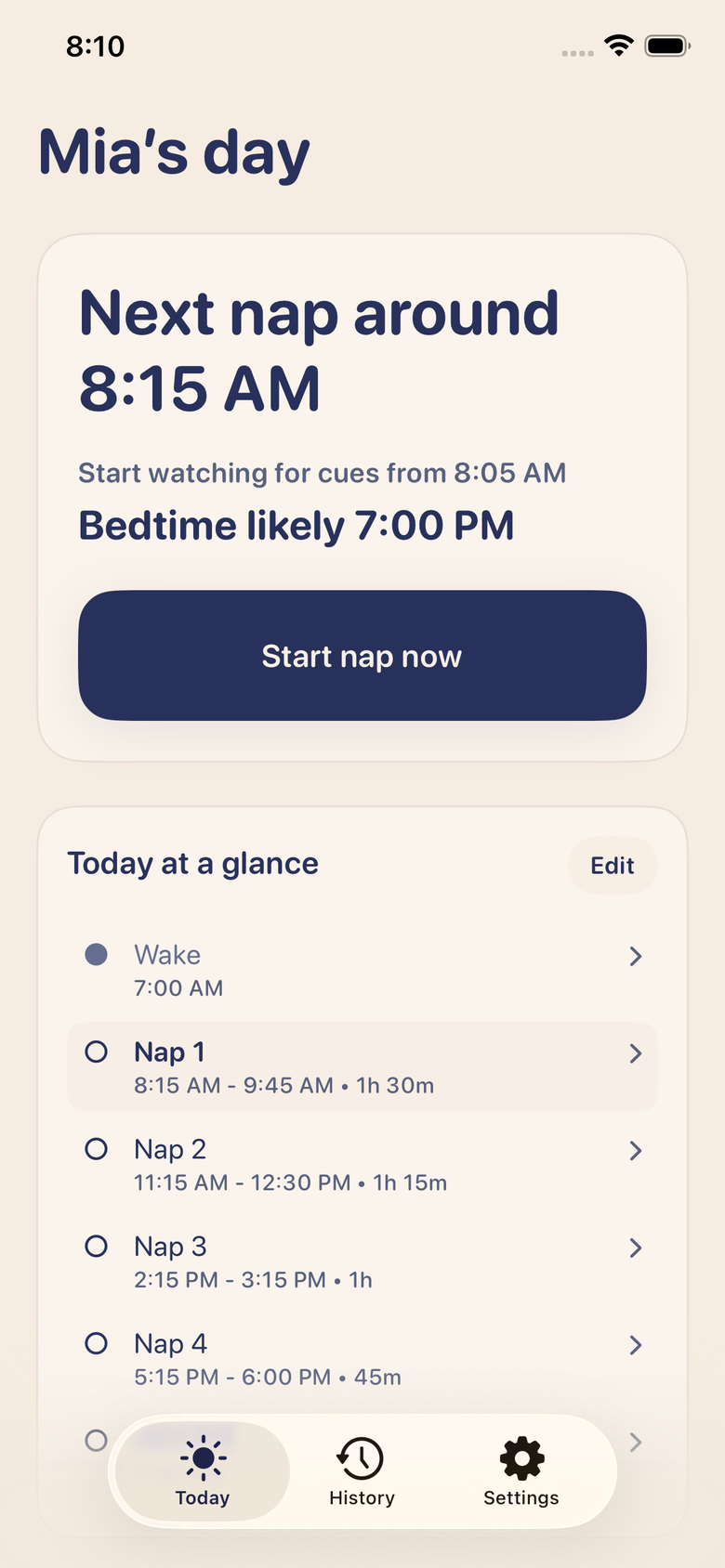
Use NapMath to see the day’s planned naps before you leave, then log the sleep that actually happens. The plan updates as naps change, with bedtime still in view when you get home.
Download on the App StoreFor iPhone · iOS 17 or later.
Sources and editorial note
General information from NapMath, the app publisher. Not clinically reviewed. The planning examples are illustrative; for advice about your baby, speak with your midwife, Well Child nurse or doctor.
Sources checked .