
“Late” depends on the day you are having. A nap that feels awkward before a family meal may be quite ordinary on a day that started later. The clock is useful information, but it cannot make the decision by itself.
Look at today before choosing a rule
Try these questions as a planning aid:
- What actually happened? Look at the last wake time and the naps your baby had, rather than the ones you expected.
- How is your baby doing? Notice feeding, comfort and their familiar signs of readiness for sleep.
- What is fixed tonight? Separate something like a necessary journey from optional jobs, visitors or a long bath.
You are gathering context, not calculating a score. This framework does not produce a universal nap cut-off or a set number of minutes to add to bedtime.
Age and individual needs matter
The NHS notes that sleep needs differ between babies and patterns change with age. In the newborn weeks, sleep and waking for feeds are spread across day and night. Follow your baby’s individual feeding advice rather than using an older infant’s evening routine.
With an older baby, familiar patterns can give you context. For example, Plunket describes possible tired signs in six- to twelve-month-olds, including grizzling and clinginess. Consider those alongside comfort and feeding; they are not a stopwatch.
Should you wake them, skip the nap or keep them awake?
A general article cannot decide that for your baby. Neither an app nor a cut-off time should override a feeding or sleep plan from your clinician. If you have been told to wake your baby for feeds, keep following that advice.
For everyday planning, avoid committing to “no more sleep” simply to preserve a time on the clock. You can make the evening less busy, have the sleep space ready and respond to your baby. If deciding about late naps is a recurring struggle, discuss the pattern with your Well Child nurse or doctor.
Keep the routine familiar and manageable
The NHS suggests a simple, soothing bedtime routine, such as quiet time together and dimmer lights. You can keep a familiar sequence without treating its start time as a deadline.
Choose the parts that are useful tonight. A clean nappy, feeding as needed and quiet time together may feel more manageable than fitting in every usual activity. Make room for a different evening without promising yourself that it will guarantee a particular night.
Keep safe sleep part of the evening
Even when the routine changes, Plunket advises a baby’s own firm, flat sleep space and placing them on their back. An adult bed, sofa or armchair is not a substitute.
If the evening followed an unexpectedly brief sleep earlier, see what to consider after a short nap. For ongoing sleep or settling concerns, contact your Well Child nurse, doctor or PlunketLine in New Zealand.
A little less to hold in your head
See the nap and bedtime together
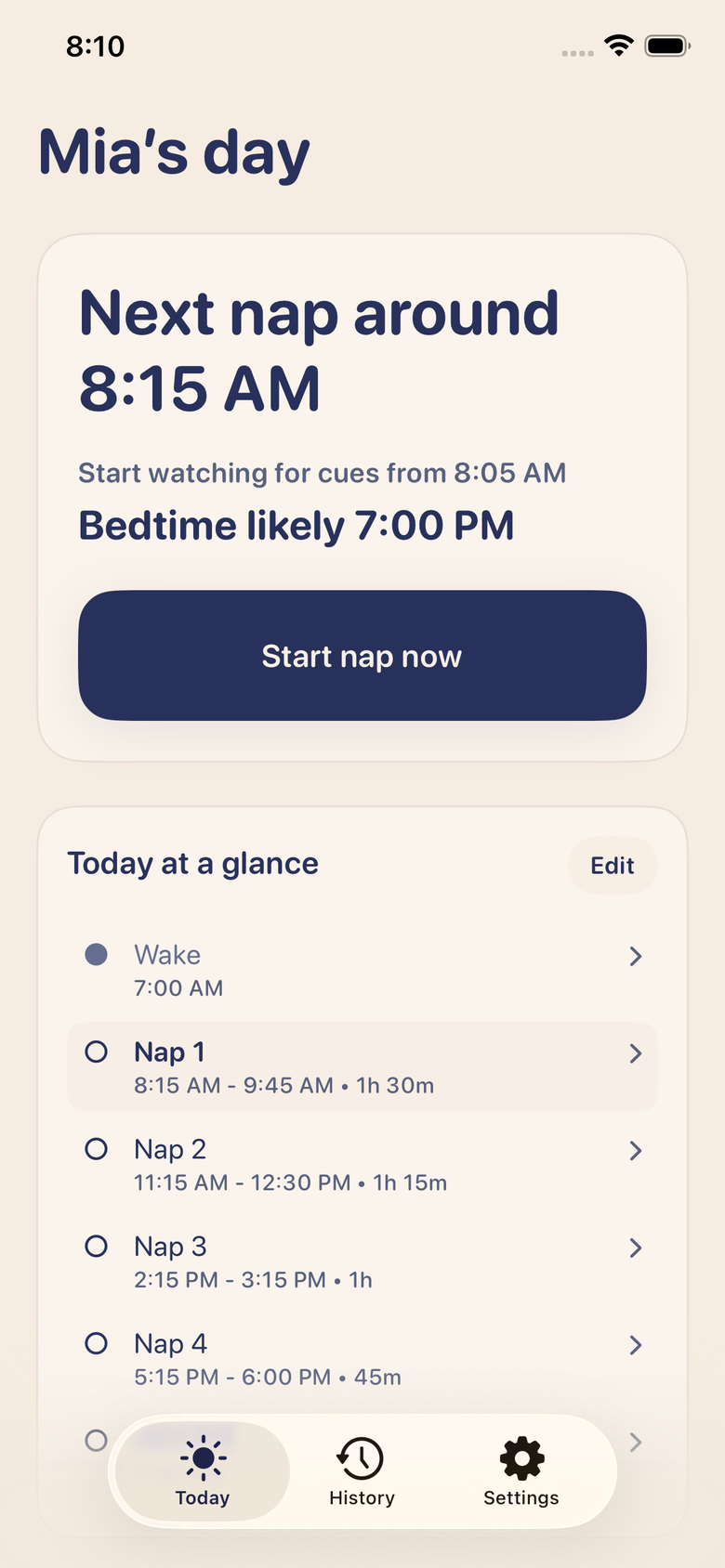
NapMath puts logged naps, the remaining plan and a bedtime outlook in one place. When the last nap changes, recording the actual sleep helps you review the updated evening plan without keeping all the times in your head.
Download on the App StoreFor iPhone · iOS 17 or later.
Sources and editorial note
General information from NapMath, the app publisher. Not clinically reviewed. The planning examples are illustrative; for advice about your baby, speak with your midwife, Well Child nurse or doctor.
Sources checked .