
Perhaps you had just made a cup of tea, or counted on that nap to get you through an appointment. It is frustrating when the plan changes. A short nap is something to work around, not a verdict on how you are doing.
What does a short nap tell you?
There is no single nap length that tells the whole story. The NHS explains that some babies sleep in short bursts and others for longer stretches. Patterns also change as babies grow. One nap on its own does not explain why your baby woke or tell you exactly what tonight will be like.
For this guide, “short” simply means shorter than you expected for your baby. It is not a diagnosis or a target to beat.
Check what is happening now
Try a quick check-in before rearranging the diary:
- Comfort and feeding: do they need a feed, a nappy change or help getting comfortable?
- How they seem: are they content and interested in you, or still looking ready for rest?
- The day so far: was this one unexpected wake-up, or have several naps gone differently from usual?
For babies aged six to twelve months, Plunket lists clinginess, grizzling and losing interest in toys among possible tired signs. Use what you know about your baby alongside those observations; a list cannot tell you the cause of every unsettled moment.
Plan only the next part
A useful planning question is: “What can I make easier over the next little while?” You could leave an optional errand for another day, have the sleep space ready, or tell someone you may need to change your arrival time. These are ways to make room, rather than a formula for making your baby sleep.
If your baby still seems ready for sleep, you can offer your usual settling support. If they are awake and content, you can spend time together and check in again. You do not have to keep trying to recreate the nap you had pictured.
When you offer sleep, use the same safe setup: on their back, in their own firm, flat baby bed, with no pillows, toys or loose blankets. See Plunket’s foundations for safe sleep.
With a newborn, start from different expectations
Newborn sleep can come in short or long bursts, and babies wake for feeds. An older baby’s nap timetable is not a template for these early weeks. Follow any feeding or waking advice your midwife or clinician has given for your baby, rather than trying to protect a planned nap.
Revisit the evening when you know more
After the next sleep, you will have more of the day to work with. If a later nap becomes part of the picture, our guide to late naps and bedtime can help you think through the evening. There is no need to choose a fixed bedtime shift because one nap was short.
If sleep changes worry you, feeding is difficult, or the situation feels hard to manage, speak with your midwife, Well Child nurse or doctor. Our guide to when to seek baby sleep help can help you think through the kind of support you want and what to ask before booking a private consultation.
If your baby is difficult to wake or has trouble breathing, seek immediate medical help through your local emergency service. The NHS describes these as urgent warning signs.
A little less to hold in your head
Let NapMath hold the updated plan
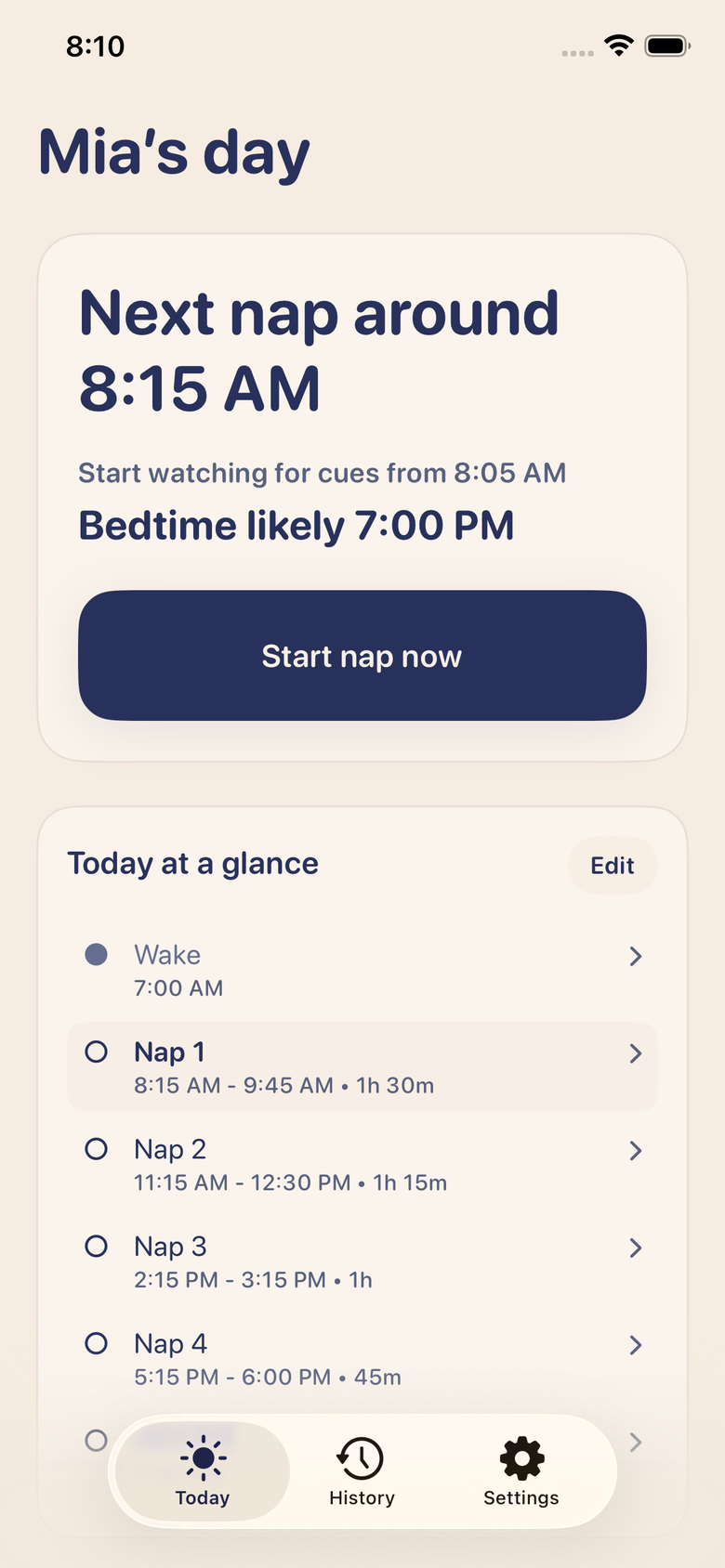
Log when the nap started and ended. NapMath updates the plan as you log sleep, helping you see the next suggested nap and the bedtime outlook together. You can keep looking at your baby while the app holds the timings.
Download on the App StoreFor iPhone · iOS 17 or later.
Sources and editorial note
General information from NapMath, the app publisher. Not clinically reviewed. The planning examples are illustrative; for advice about your baby, speak with your midwife, Well Child nurse or doctor.
Sources checked .