
A small plan can make responsibilities clearer. It will not determine how your baby sleeps, but it can reduce how much you have to negotiate while tired.
If you are parenting alone, the same question still matters: what part of the next day could somebody else take off your hands?
Agree on one priority before bedtime
Choose a quiet moment before the first wake-up and ask: “Which part of tonight or tomorrow morning would help most if someone else handled it?”
Be specific. “Help more overnight” is harder to act on than “Please take responsibility for settling after the feed while I go back to bed.”
Possible priorities include an earlier bedtime for one parent, support after feeds, or somebody else managing the older child's morning. Pick something feasible for tonight. You can revise it tomorrow.
The NHS recommends sharing care where possible and asking family or friends for support with rest. It also notes that a partner can help around breastfeeding, such as taking on morning care so the feeding parent can rest. NHS: sleep and tiredness after having a baby.
Divide the jobs around feeding
Feeding may limit how you divide the night, but there are other jobs: bringing the baby to the feeding parent, handling a diaper change when needed, resettling, or taking responsibility once the morning begins.
Work around your baby's feeding needs and the advice you have been given. A rest plan should not depend on delaying a needed feed, dropping feeds, or changing feeding methods just to make shifts look equal.
For example, one parent might breastfeed while the other handles the next settling attempt and morning care. In another family, both parents may be able to take turns with feeds. These are examples of sharing tasks, not instructions about feeding intervals.
If feeding itself is difficult, ask your pediatrician, family doctor, midwife or a qualified feeding specialist for advice. Tell them what is happening at night and what kind of support would make feeding more manageable.
Use a simple handover
You do not need a detailed report in the middle of the night. Share what the next caregiver needs to know:
- What just happened: “They fed recently and woke again when I put them down.”
- What you have checked: “Their diaper is clean; I have not noticed anything unusual.”
- What you are asking for: “Can you take over settling while I rest?”
- When to get help: “Please wake me if you need another pair of hands.”
Passing responsibility over explicitly is useful. “I am taking over now” is easier to understand than both people hovering and hoping the other will act.
Make a plan for when someone is too tired
Set up your baby's safe sleep space before you are exhausted. The American Academy of Pediatrics recommends a separate, firm, flat sleep surface, placing baby on their back, and keeping pillows, toys and loose bedding out. A sofa or armchair is not a safe place to fall asleep with a baby. AAP: keeping your sleeping baby safe.
If you are struggling to stay awake while holding your baby, put them in their safe sleep space and get another adult's help if available. The plan should allow either caregiver to say they cannot safely continue.
If crying is making you feel overwhelmed or angry, put your baby safely in their crib and step away briefly to calm down, returning to check on them. Never shake or harm a baby. This is a coping step for a difficult moment, not a sleep-training method. NHS: coping with infant crying.
When there is no one to take the next shift
A night plan cannot create another caregiver. Try asking for a small, specific piece of daytime help:
- “Could you look after the baby here tomorrow morning while I rest?”
- “Could you do school pickup so I have one less thing to manage?”
- “Could you bring dinner ready to heat, rather than visiting for a meal?”
Help can also be taking an errand or household job away. Let the helper know whether you want company or time off. If you have nobody available, tell your pediatrician, family doctor or child health nurse that lack of support is part of what you need help with.
Leave a note for tomorrow
Our suggested plan is short enough to put in a shared note or on paper:
| Tonight's question | Our answer |
|---|---|
| Who handles the first wake-up? | ___ |
| Who handles feeding, and who helps around it? | ___ |
| When does care pass to the other person? | ___ |
| What happens if either of us is too tired to continue? | ___ |
| Who handles morning care or the older child? | ___ |
| What can we cancel, postpone or ask someone else to do tomorrow? | ___ |
Tomorrow, ask what helped and what was unrealistic. You do not have to solve the whole week in one conversation.
If exhaustion is affecting your ability to cope, seek support. Persistent low mood, hopelessness, or being unable to sleep even when you have the opportunity are reasons to speak with a health professional. NHS: tiredness and when to get help.
Our guide to when to seek baby sleep help explains how to explore local and private support.
A little less to hold in your head
Leave a little less to remember
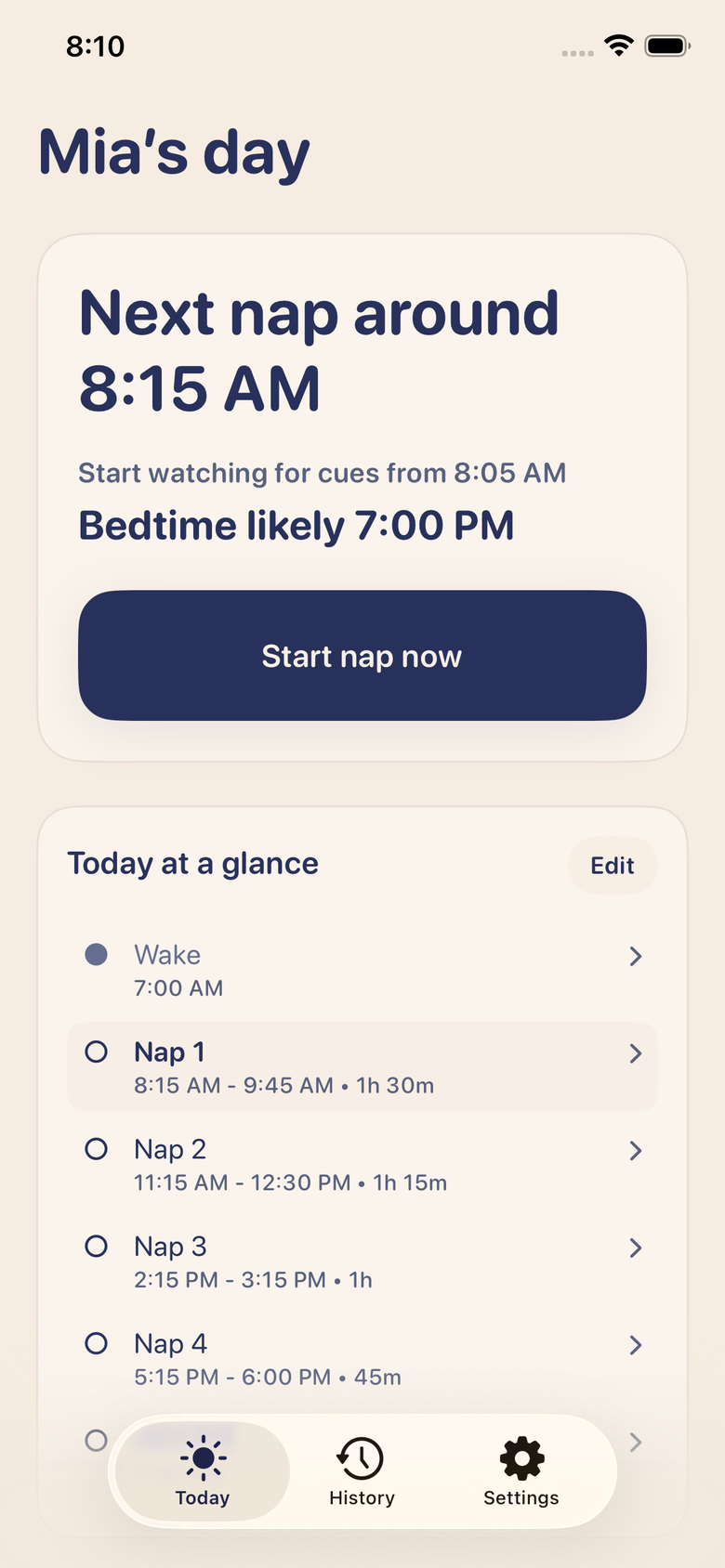
For the daytime planning that follows a difficult night, NapMath can hold the nap timings and update the plan as you log sleep, leaving a little less to remember.
Download on the App StoreFor iPhone · iOS 17 or later.
Sources and editorial note
Written by NapMath editorial, the app publisher. General information, not clinically reviewed. The handover examples and planning table are practical suggestions, not a prescribed sleep or feeding schedule. Follow advice from your baby's health professional.
Sources checked .