
The next step might be a conversation with your pediatrician, family doctor or child health nurse, a community support service, or a private consultation. Start with what is hardest for your family and the kind of help you want.
Is it time to ask for help?
Perhaps you can manage the wake-ups, but the hour of settling afterwards is wearing you down. Perhaps naps are manageable and evenings feel impossible. Or perhaps the hardest part is disagreeing about what to try next.
Try completing this sentence: “We would like help with ___ because it is affecting ___.”
For example:
- “We would like help with settling because neither of us feels confident about what to do.”
- “We would like help understanding night waking because we keep changing our approach.”
- “We need a more manageable night plan because we are too exhausted to keep doing this.”
These are useful starting points for a consultation. A count of naps or wake-ups cannot explain the whole situation. Raising Children Network recommends seeking professional help when sleep and settling are causing concern or stress, particularly when the cause or next steps are unclear. Getting help with sleep concerns.
Start with health or feeding concerns
If your baby is feeding poorly, unusually sleepy, or you are worried about their breathing or general health, contact a health professional before treating the issue as a routine problem. NHS guidance on signs of illness can help you recognise concerns that need medical attention.
A baby who is difficult to wake or struggling to breathe needs urgent medical help. Do not wait for a sleep appointment. Contact your local emergency service. NHS: urgent warning signs in babies and young children.
The words “sleep consultant” alone do not tell you someone's clinical qualifications. Ask what they are qualified to assess and when they would refer you to a clinician. Advice about reducing night feeds should take account of your baby's individual feeding and growth needs and any advice from their health professional.
Check what support is available before paying privately
Ask your child's usual healthcare provider what sleep and settling support is available locally. Depending on where you live, this might include a child health nurse, health visitor, parenting helpline or specialist referral. Ask about eligibility, waiting times and costs; availability varies between countries and services.
A useful first question is: “Can we talk through our baby's sleep and feeding, and what support can you refer us to?”
A private consultation may still suit your family. Knowing the other options helps you choose without assuming a paid package is the only route. Raising Children Network describes several kinds of professional and community support; its specific service listings apply to Australia. Finding help with sleep and settling.
What would make a private consultation worthwhile?
Before comparing packages, decide what you want to leave with. It could be a clearer understanding of your baby's pattern, help choosing an approach, or follow-up while you put a plan into practice.
Ask about the actual service rather than relying on words such as “gentle”, “holistic” or “personalised”. Our suggested questions are:
| Ask before booking | What the answer helps you decide |
|---|---|
| What training do you have, and what ages do you work with? | Whether their experience fits your baby. |
| What would you need to know about feeding, health and our current routine? | How they will understand your situation before advising. |
| What happens if our baby cries or becomes more upset? | Whether the approach fits your boundaries. |
| Can we continue the feeding and comforting choices that matter to us? | Whether your priorities are compatible. |
| What do we do if the plan feels unmanageable or does not help? | Whether there is a clear review or stop point. |
| What follow-up is included, and when will you reply? | Whether support will be available when you expect it. |
| What is the total cost, including extensions or extra calls? | Whether the package fits your budget. |
We would be cautious about guaranteed overnight transformations or pressure to buy immediately. Ask for the proposed approach, boundaries and fees in writing so you can consider them when you are less rushed.
Bring a short picture of your real days
You do not need a perfect spreadsheet. If you already keep notes, bring approximate sleep times, how settling went, feeding concerns, and what you have tried. Add the practical constraints: another child, shift work, daycare, or one parent handling nights alone.
Write down one or two priorities and anything you are uncomfortable doing. A suitable plan should account for your family and include support with implementation and what to do if it is not working. Raising Children Network: finding help with sleep and settling.
What can you do while you wait?
Choose one thing that reduces the load today: arrange help with the morning, cancel an optional outing, or agree who handles the next settling attempt. Our guide to sharing the load after broken nights includes a simple handover plan.
If a short nap is making the afternoon harder, read what to consider when a nap ends early.
A little less to hold in your head
Keep the daytime plan in view
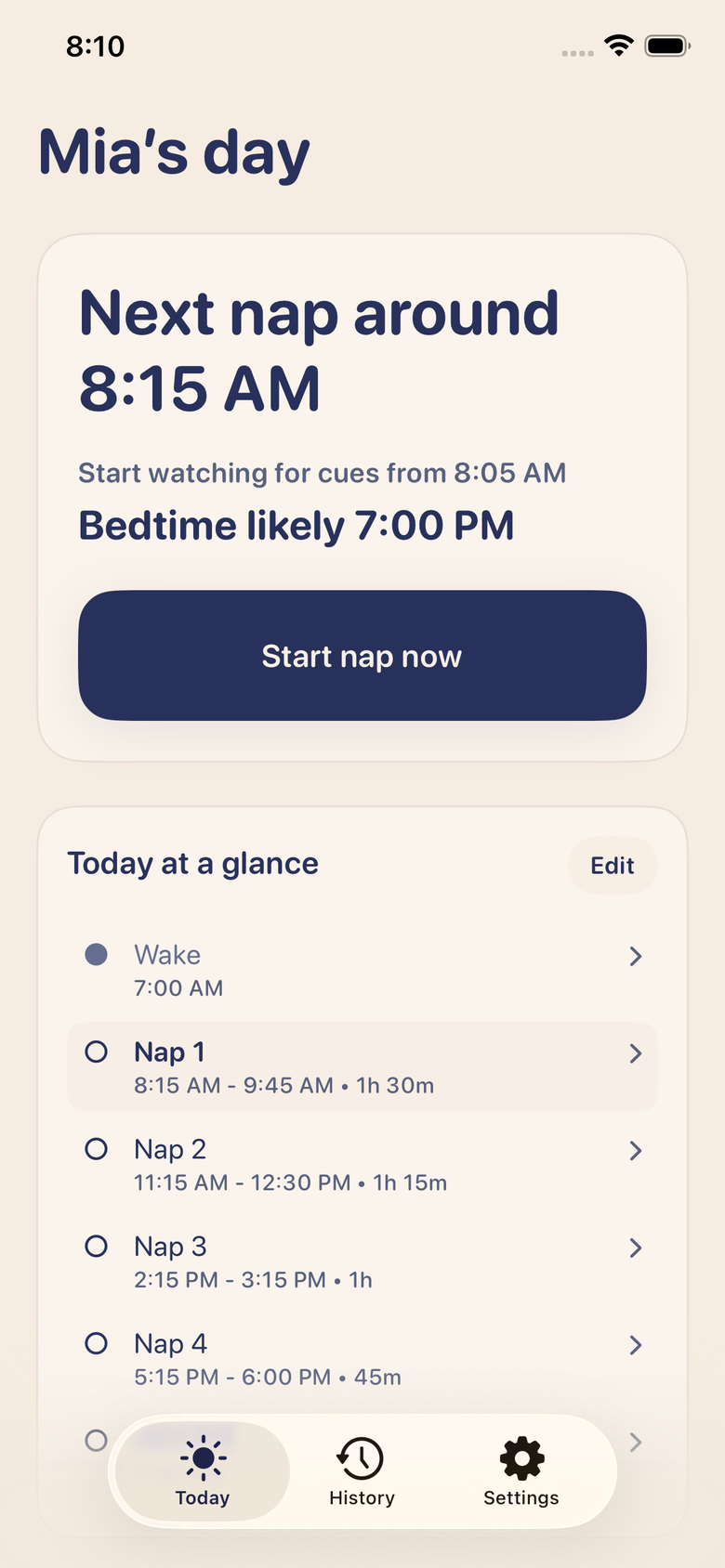
NapMath can help you keep track of daytime naps and see the updated plan with bedtime in view. It is a planning tool; individual sleep or health concerns deserve support from someone qualified to help.
Download on the App StoreFor iPhone · iOS 17 or later.
Sources and editorial note
Written by NapMath editorial, the app publisher. General information, not clinically reviewed. The booking questions are an editorial checklist, not a professional accreditation standard. Follow advice from your baby's health professional.
Sources checked .